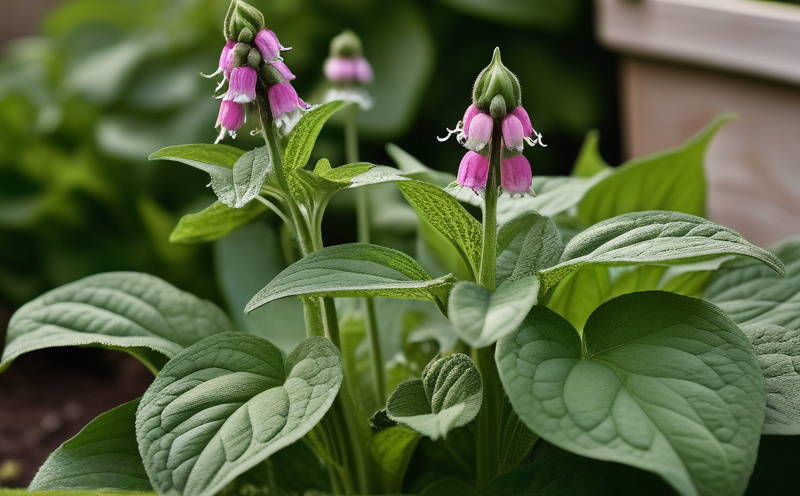
🌿 Comfrey
Symphytum officinale
herbs
perennial herb
Boraginaceae
☀️ Sun
full sun to partial shade
💧 Water
moderate to high (prefers consistent moisture)
🗺️ Zones
4, 9
🧪 Soil pH
6.0, 7.0
🪴 Soil Type
moist, rich loam; tolerates clay
🚿 Drainage
moist but well-drained
📏 Spacing
24, 36 inches
📐 Height
24, 48 inches
⏱️ Maturity
365 days (perennial, harvest leaves after first year)
Key:🤝 Grows well together❌ Keep apart☀️ Sun needs💧 Water🗺️ Hardiness zone
🤝 Companions (18)
Comfrey planted in orchard understory mines nutrients for fruit trees; its dense growth suppresses grass competition around tree bases.
Comfrey's nutrient-rich leaves used as mulch feed asparagus beds with high potassium needs; doesn't compete with asparagus crowns.
Aromatic herb that improves health of neighboring plants
Comfrey leaves used as mulch provide potassium and trace minerals that beans need for pod development; beans fix nitrogen comfrey uses.
Comfrey mines potassium and calcium from deep soil; comfrey mulch benefits acid-loving blueberries.
🤝 Fruit Trees
The ultimate orchard companion - dynamic accumulator, living mulch, pollinator magnet
Comfrey mulch around gooseberries provides potassium needed for fruit quality; attracts pollinators during gooseberry bloom.
Universal garden companion; deters pests and attracts beneficials
Trap crop and ground cover; attracts pollinators IMPORTANT management caveat: without active management, nasturtiums can become a SOURCE of aphids that migrate to nearby crops. Either remove aphid-infested nasturtium plants promptly, or treat the trap crop itself to eliminate the aphid colony before it spreads. Strategic placement within 4-5 feet of protected crops is key.
Comfrey accumulates potassium and calcium for peach trees; living mulch in orchard understory.
Comfrey mulch slowly releases potassium and phosphorus needed for pepper fruit development and ripening.
Comfrey leaves used as mulch in potato trenches provide potassium for tuber formation; decomposing leaves suppress wireworm.
Comfrey's deep roots bring up nutrients for raspberries; leaves make excellent berry mulch.
Comfrey's deep roots mine potassium essential for tomato fruit development; leaf mulch around tomatoes slowly releases nutrients.
⚠️ Keep Apart (6)
Allelopathic - may inhibit growth
Both have deep, aggressive root systems that compete for subsoil nutrients and space; difficult to separate once established.
Mint's aggressive runners invade comfrey's crown; comfrey's dense shade suppresses mint but the root battle creates ongoing conflict.
Susceptible to juglone toxicity from walnut trees
📝 Growing Notes
The ultimate permaculture plant , dynamic accumulator with taproots up to 10 feet deep that mine potassium, calcium, magnesium, and phosphorus from subsoil. Use leaves as mulch, compost activator, or make 'comfrey tea' liquid fertilizer. Biomass powerhouse: can be cut 3-5 times per season. 'Bocking 14' cultivar is sterile (non-seeding) and preferred for gardens. Plant where you want it permanently , roots regrow from tiny fragments.
🛒 Buy Seeds & Plants
Baker Creek Heirloom Seeds
Johnny's Selected Seeds
Botanical Interests
True Leaf Market
Burpee
Territorial Seed Company
Plot Buddies is reader-supported. When you buy through links on our site, we may earn an affiliate commission at no extra cost to you. This does not affect our plant recommendations. We only link to retailers we trust.