🌳 Walnut (Black)

Juglans nigra (Black Walnut); also Juglans regia (English/Persian Walnut)
tree Deciduous hardwood tree Juglandaceae
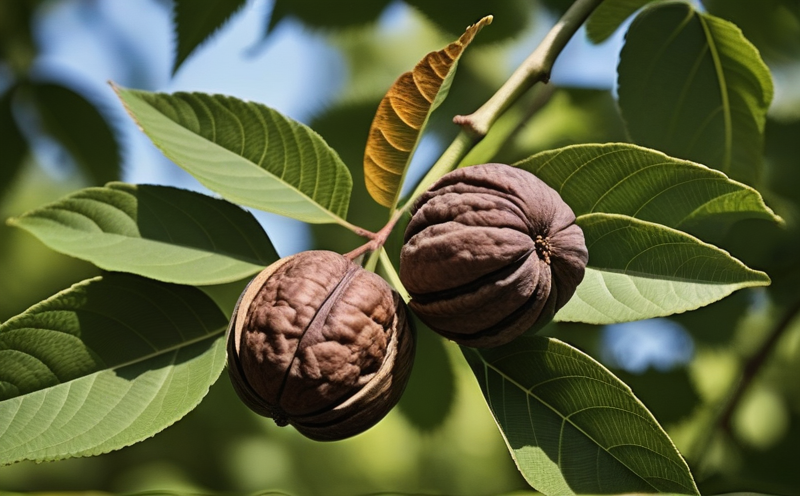
Walnut (Black) plant photo
☀️ Sun
Full sun; minimum 6 hours direct sun. Intolerant of shade , juvenile trees cannot establish under canopy.
💧 Water
Medium moisture. Prefers moist, well-drained sites. Drought-tolerant once established (deep taproot).
🗺️ Zones
4-9 (some sources extend to Zone 10 in western US)
🧪 Soil pH
6.0-7.5 (optimal 6.5-7.5; tolerates 5.0-8.0)
🪴 Soil Type
Deep, rich loamy soils preferred; tolerates sandy loam to clay-loam. Requires at least 4 feet of soil depth.
🚿 Drainage
Well-drained, moist to medium moisture. Does not tolerate standing water. Drought-tolerant once established.
📏 Spacing
30-60 ft between trees (30 ft minimum; 60 ft for maximum nut production)
📐 Height
75-100 ft at maturity; exceptional specimens reach 125 ft. Trunk to 6 ft diameter.
⏱️ Maturity
4-6 years to first nuts; significant annual production begins at 10-20 years. Trees live 150-250+ years.

🍴 Edible Parts

🍽️ Nuts (seed kernel) , rich, distinctive flavor; raw or cooked 🍽️ Nut oil , culinary and cosmetic 🍽️ Sap , can be tapped in early spring like maple (lower sugar content) 🍽️ Green nut hulls , medicinal use and dye (not eaten)
Key:🤝 Grows well together❌ Keep apart☀️ Sun needs💧 Water🗺️ Hardiness zone

🤝 Companions (15)

Beets, carrots, parsnip confirmed tolerant per Purdue Extension. Root vegetables generally perform well in walnut influence zones.
🤝 Black Raspberry
One of the best-documented juglone-tolerant fruits. Confirmed tolerant in Purdue Extension HO-193 and Morton Arboretum. Thrives on the woodland edge habitat walnut creates. Can be planted within the drip line. IMPORTANT: Red raspberry and blackberry are sensitive , only black raspberry (Rubus occidentalis) is confirmed tolerant.
Confirmed tolerant by Morton Arboretum and Penn State Extension. Ribes spp. can be planted within the walnut root zone. Useful for productive planting under walnut canopies where most fruit crops would fail.
Confirmed tolerant by Purdue Extension HO-193 and Morton Arboretum. A robust groundcover option under walnut canopy where shade-tolerant perennials are needed.
Listed as juglone-tolerant by Morton Arboretum and multiple extension sources. Thrives in the partial-shade, moist woodland edge conditions that black walnut creates. Practical companion for productive/medicinal guilds around walnut trees.
American hazelnut (Corylus americana) listed as tolerant by Morton Arboretum. Another native nut producer that can be planted in walnut guilds for productive multi-layer food forest.
Listed as tolerant (many varieties) by Purdue Extension. Shade-tolerant nature aligns well with conditions under walnut canopy; appears to tolerate juglone at typical soil concentrations.
Onions, garlic, leeks confirmed tolerant by Purdue Extension. Among the most useful allium crops that can be grown within walnut influence zone.
Native woodland understory tree that co-evolved with black walnut in eastern North American forests. Consistently documented as juglone-tolerant by Purdue, Penn State, and Morton Arboretum. Thrives in partial shade of walnut canopy. Likely tolerant due to evolutionary co-adaptation in the same riparian and woodland edge habitats.
American persimmon (Diospyros virginiana) confirmed juglone-tolerant by Purdue Extension, Morton Arboretum, and field observation , has been observed producing fruit directly beneath black walnut canopy. A co-native species adapted to similar woodland habitats.
🤝 Redbud
Cercis canadensis confirmed tolerant by Purdue Extension and Morton Arboretum. Thrives in partial woodland conditions; one of the most reliable juglone-tolerant ornamental trees.
Confirmed juglone-tolerant by Morton Arboretum. A native fruiting tree/shrub (Amelanchier spp.) useful for edible companion planting near black walnut.
Native woodland shrub (Lindera benzoin) confirmed juglone-tolerant. Naturally co-occurs with black walnut in eastern woodland ecosystems. Provides pollinator habitat and edible/medicinal berries.
Squash and melons confirmed tolerant by Purdue Extension and MSU Extension. Useful for gardeners working near established walnut trees.
Confirmed juglone-tolerant vegetable by Purdue Extension and MSU Extension. One of the few annual crops that can be grown in proximity to black walnut. Monocot physiology appears broadly resilient to juglone.

⚠️ Keep Apart (15)

Confirmed sensitive field crop per Purdue Extension research. Juglone inhibits alfalfa germination and growth. Important consideration for agroforestry plantings near black walnut.
Listed as sensitive by Purdue Extension. Orchard planning near black walnut requires significant distance. Pear also listed as sensitive.
Confirmed sensitive by Purdue Extension and MSU Extension. Shows stunting, yellowing, and slow decline. Particularly problematic as asparagus is a long-lived perennial in sustained proximity to walnut roots.
Listed as sensitive by Purdue Extension. Critical distinction: ONLY black raspberry (Rubus occidentalis) is juglone-tolerant. Red raspberry and blackberry are sensitive despite being the same genus.
Confirmed sensitive by Purdue Extension and Morton Arboretum. Blueberries also prefer acidic soil (pH 4.5-5.5) vs. walnut's preferred range , a second incompatibility beyond juglone.
Confirmed sensitive by Purdue Extension. Brassica crops generally decline in walnut root zones.
Sensitive solanaceous crop. Disruption of cellular respiration via juglone , same mechanism as tomato and potato. Listed as sensitive by Purdue Extension, Morton Arboretum, Iowa State Extension.
Confirmed sensitive by Purdue Extension, Iowa State Extension, Morton Arboretum. Standard landscape hydrangeas (bigleaf, panicle) damaged by juglone. Exception: Wild hydrangea (H. arborescens) is listed as tolerant.
Confirmed sensitive by Purdue Extension and Iowa State Extension. Popular landscape shrub that declines dramatically near black walnut. Wilting and dieback are typical symptoms.
Highly sensitive solanaceous crop. All Capsicum peppers (bell, hot, sweet) are confirmed sensitive. Juglone inhibits respiration at concentrations as low as 3 µM. Confirmed by Purdue Extension, MSU Extension.
Confirmed sensitive annual by Purdue Extension and Morton Arboretum. Shows rapid wilting near walnut , useful indicator plant for gardeners mapping the juglone zone.
Highly sensitive nightshade/solanaceous crop. Same mechanism as tomato , juglone disrupts cellular respiration. Underground tubers are particularly vulnerable as they develop in the root zone where juglone concentrates. Confirmed by Purdue Extension HO-193, MSU Extension.
Among the most well-known ornamental casualties of juglone. Confirmed highly sensitive by Purdue Extension, Morton Arboretum, and Missouri Botanical Garden. Symptoms: yellowing, wilting, death , often quickly after walnut roots penetrate their root zone.
Listed as sensitive by Purdue Extension and Morton Arboretum. Long-lived perennial that suffers cumulative damage from juglone exposure. Not suitable within walnut root zone.
The most well-documented juglone-sensitive plant. Juglone inhibits electron transport chain function and oxidative phosphorylation in tomato root cells, blocking ATP production needed for water and nutrient uptake. Symptoms: rapid wilting, yellowing, death. Confirmed experimentally. Keep tomatoes at minimum 80 ft from walnut trunk.
📝 Growing Notes

CRITICAL JUGLONE TOXICITY ZONE: Black walnut is the most allelopathic tree in North American gardens. All parts contain juglone (5-hydroxy-1,4-naphthoquinone) , highest in roots, nut hulls, and buds. The toxic zone extends 50-80 ft from the trunk of a mature tree. Juglone inhibits cellular respiration, blocking electron transport chain function and depriving cells of ATP. Toxicity PERSISTS FOR YEARS after tree removal as decaying roots continue releasing juglone. Do NOT use walnut leaves, bark, or wood chips as mulch near sensitive plants , even composted material may be harmful. Do NOT use walnut shavings as horse bedding (toxic to horses). Note: English walnut (J. regia) produces juglone at far lower concentrations and rarely causes toxicity in practice.

🛒 Buy Seeds & Plants

Plot Buddies is reader-supported. When you buy through links on our site, we may earn an affiliate commission at no extra cost to you. This does not affect our plant recommendations. We only link to retailers we trust.