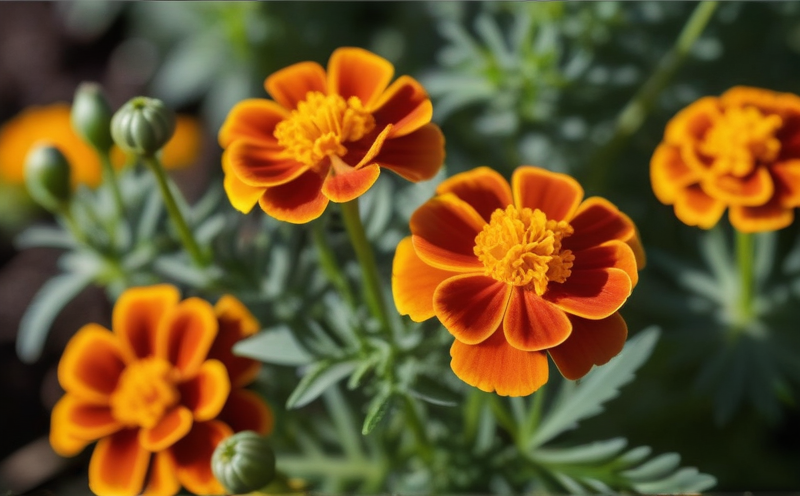
Asparagus beetles (Crioceris asparagi and C. duodecimpunctata) are deterred by marigold volatile compounds. Attracts beneficial insects that prey on these beetles. Compatible as border planting around permanent asparagus beds.
Combined volatile profiles (marigold's limonene/thiophenes + basil's linalool/eugenol) create broader-spectrum pest deterrence. Both are drought-tolerant, full-sun annuals with compatible care requirements.
Marigold root exudates (alpha-terthienyl) suppress root-lesion nematodes (Pratylenchus spp.) that damage carrot roots , most effective as pre-plant cover crop. Volatile compounds may also disrupt carrot fly (Psila rosae) host-finding.
Marigold's strong volatile scent deters cucumber beetles (Acalymma vittatum and Diabrotica spp.) , major cucurbit pests , by interfering with host-finding behavior. Attracts beneficial insects preying on aphids.
T. erecta volatile organic chemicals (ocimene, beta-phellandrene, limonene) repel eggplant fruit and shoot borer (Leucinodes orbonalis) in repellency assays. Also deters aphids colonizing eggplant.
Alliums and marigolds create layered chemical defense. Marigold volatiles deter thrips and aphids; both produce strong aromatic compounds that confuse pest insects through olfactory interference.
Marigold volatile scent deters aphids (including Myzus persicae) and slugs from colonizing nearby lettuce. Attracts hoverflies whose larvae are voracious aphid predators.
Marigold volatiles deter thrips and aphids that damage allium foliage. Combined aromatic compounds from both plants create layered olfactory interference for pest insects.
Peppers share the same whitefly, aphid, and nematode pressures as tomatoes. Marigold airborne volatiles (limonene, thiophenes) deter these pests. Border planting attracts hoverflies and parasitic wasps that prey on aphids attacking pepper plants.
Marigold's volatile scent masks rose host-plant cues used by aphids. Attracts lacewings (Chrysoperla spp.), hoverflies (Episyrphus balteatus), and parasitic wasps , all aphid natural enemies. Marigold foliage odor may repel Japanese beetles (Popillia japonica).
Strawberries are highly susceptible to root-knot nematodes (Meloidogyne spp.). Pre-planting marigolds as a cover crop significantly reduces nematode populations. As border planting, deters spider mites and attracts beneficial predatory insects.
Squash vine borers and cucumber beetles are deterred by marigold volatiles. Marigold's attraction of hoverflies (whose larvae eat aphids) provides additional pest control for squash.
French marigolds (T. patula) release airborne limonene which deters glasshouse whitefly (Trialeurodes vaporariorum) , confirmed by 2019 Newcastle University/PLOS ONE study. As a pre-plant cover crop, suppresses root-knot nematodes (Meloidogyne spp.) that devastate tomatoes. Plant marigolds 6, 8 weeks before tomatoes for nematode benefit.