🥕 Radish

Raphanus sativus
vegetables root vegetable (brassicaceae)
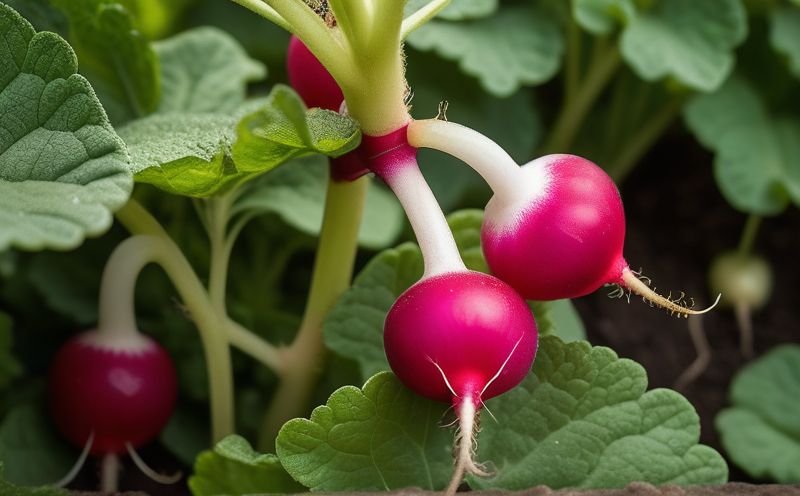
Illustration of Radish
☀️ Sun
Full sun (6 hours); tolerates light partial shade; afternoon shade helpful in warm weather to delay bolting
💧 Water
Medium; 1 inch per week consistently; irregular watering causes woody/hot radishes and splitting; keep soil evenly moist throughout root development
🗺️ Zones
2, 3, 4, 5, 6, 7, 8, 9, 10, 11
🪴 Soil Type
Light, loose, sandy loam with no stones; compacted or rocky soil causes deformed/forked roots; moderate organic matter — avoid fresh manure (causes forking and excessive leaf growth at expense of roots)
🧪 Soil pH
6.0–7.0 (slightly acidic to neutral)
💧 Drainage
Well-drained essential; raised beds ideal; waterlogged soil causes root rot and split radishes
📏 Spacing
Spring types: 1–2 inches apart, rows 6–12 inches; winter/daikon types: 4–6 inches apart, rows 12–18 inches; thin early for proper root development
📅 Days to Maturity
21-35 days (from seed); most varieties ready in 3-4 weeks

🍴 Edible Parts

🍽️ ["Root (swollen hypocotyl \u2014 raw🍽️ cooked🍽️ pickled)"🍽️ "Leaves/greens (edible \u2014 peppery🍽️ use in salads/stir-fries/pesto)"🍽️ "Seed pods (especially rat-tail radish \u2014 crisp🍽️ spicy)"🍽️ "Sprouts (popular microgreen)"]

🤝 Companions (8)

Classic companion planting duo — radishes germinate in 3–5 days, marking rows for slow (14–21 day) carrots; radishes break soil crust; harvested before carrots need space
Repels cucumber beetles with strong scent; radishes mature and are harvested before cucumbers spread
🤝 Squash (all types)
Repels squash bugs and cucumber beetles; quick harvest before squash vines dominate the space
Radishes mark rows; repel flea beetles from lettuce; both cool-season, harvested before lettuce matures
Trap crop for flea beetles (radishes' main pest); nasturtiums draw pests away from radishes
🤝 Pea
Peas fix nitrogen benefiting radishes; radishes are harvested early, leaving peas to mature; both cool-season
🤝 Bean (bush)
Beans fix nitrogen; radishes are harvested before beans need full space; radishes may repel Mexican bean beetles
Improves radish flavor and tenderness; repels aphids

⚠️ Keep Apart (3)

Mutually antagonistic — hyssop and radishes inhibit each other's growth
Radishes near potatoes may develop off-flavors; conflicting use of potassium
Allelopathic — inhibits radish root development

💊 Medicinal Uses

["Contains glucosinolates and isothiocyanates \u2014 anti-cancer compounds; radish sprouts have the highest concentration", "Good source of vitamin C (especially daikon), folate, and potassium", "Traditional digestive aid \u2014 stimulates bile production; used in Ayurveda and TCM for liver/gallbladder health", "Mild diuretic; traditionally used for urinary tract health", "Contains antifungal proteins (RsAFP2) being studied for medicinal applications"]

📝 Notes

Radishes are one of the fastest vegetables — spring types mature in 21–30 days, making them ideal for intercropping and succession planting. Two categories: spring/summer (small, fast, eaten fresh) and winter/storage (large — daikon, watermelon radish, black Spanish — slower, can store months). Heat and drought cause excessively hot/pungent flavor and pithy texture. Flea beetles are the main pest — row covers prevent damage. The 'radish trick' of interplanting with carrots is one of the most well-documented companion planting techniques — it solves the problem of slow-germinating carrots getting lost or crusted over.