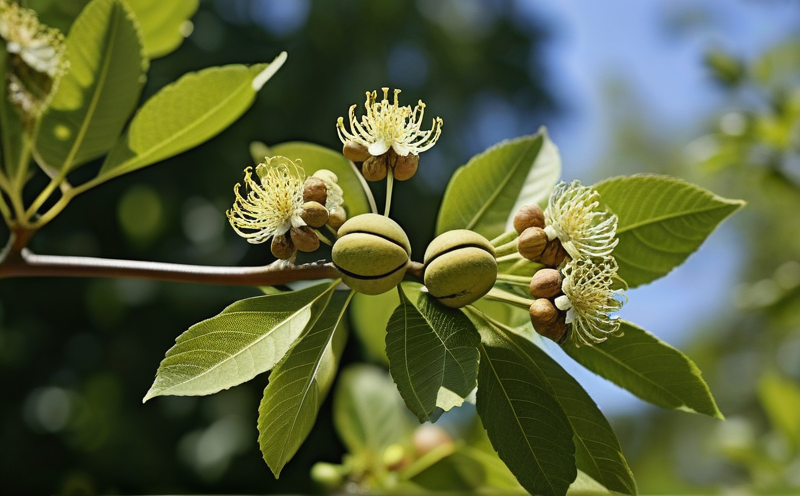
🥜 Black Walnut

Juglans nigra
nuts tree
Illustration of Black Walnut
☀️ Sun
full sun
💧 Water
moderate
🗺️ Zones
4-9
🪴 Soil Type
deep loamy, alluvial (prefers rich bottomland)
🧪 Soil pH
6.0-7.5
💧 Drainage
well-drained
📏 Spacing
40-60 feet (timber), 30-40 feet (nut production)
📐 Height
70-100 feet (can reach 150 feet)
📅 Days to Maturity
2920-4380 days (8-12 years to first nuts from seed, 4-6 years grafted)

🍴 Edible Parts

🍽️ nut kernels (seed)🍽️ sap (for syrup)

🤝 Companions (11)

Elderberry is one of the few fruiting shrubs naturally tolerant of juglone; it thrives in the understory of black walnut trees
Pawpaw has natural tolerance to juglone and thrives in the dappled shade and rich leaf litter under black walnuts
🤝 Serviceberry
Serviceberry (Amelanchier) is juglone-tolerant and grows well as an understory tree beneath the walnut canopy, providing additional fruit
🤝 Currant (Red/Black)
Currants have moderate juglone tolerance and produce well in partial shade beneath walnut trees; their shallow roots occupy different soil layers.
Gooseberries tolerate juglone better than most fruit bushes; they thrive in dappled understory light beneath walnuts.
🤝 Black Raspberry
Black raspberries show natural juglone tolerance in woodland edge environments; they grow well in filtered light under walnut canopies.
Mulberry trees exhibit strong juglone tolerance and can be planted near black walnuts without ill effects; both are large trees that share canopy space.
Persimmons are notably juglone-tolerant fruit trees; they co-exist with black walnuts in native woodland settings using deeper soil layers.
🤝 Hackberry (Celtis)
Hackberry is a native North American tree with excellent juglone tolerance; it serves as a wildlife-supporting companion in walnut groves.
🤝 Hickory
Hickory species are juglone-tolerant Juglandaceae members; they share similar soil preferences and can be interplanted in nut orchard systems.
🤝 Hosta
Hostas are shade-tolerant ornamental perennials with documented juglone resistance; they provide attractive ground cover beneath walnut trees.

⚠️ Keep Apart (7)

Tomatoes are among the most juglone-sensitive plants — even minor root contact causes rapid wilting, yellowing, and death within days
Potatoes are highly sensitive to juglone; they exhibit stunted growth, leaf curl, and tuber malformation near black walnut trees
Apple trees show severe juglone sensitivity — leaf yellowing, branch dieback, and reduced fruit production when roots contact walnut roots
⚠️ Pepper
Peppers are highly sensitive to juglone; even small amounts cause stunting, leaf curl, and blossom drop — keep well away from walnut root zone.
Eggplants wilt and decline rapidly when exposed to juglone; among the most sensitive Solanaceae to walnut toxicity.
Blueberries are extremely juglone-sensitive; they exhibit severe chlorosis and branch dieback within weeks of root contact with walnut allelochemicals.
⚠️ Azalea / Rhododendron
Azaleas suffer rapid decline from juglone exposure; leaf necrosis and death occur within a single growing season when planted near black walnut.

💊 Medicinal Uses

Black walnut hulls and leaves contain juglone (5-hydroxy-1,4-naphthoquinone), which has potent antimicrobial, antifungal, and antiparasitic properties. Black walnut hull tincture is used in herbal medicine as an antiparasitic (especially for intestinal worms), antifungal (Candida, ringworm), and digestive tonic. The nut kernels are rich in omega-3 fatty acids (alpha-linolenic acid), antioxidants, protein, and minerals including manganese, copper, and magnesium. Walnut consumption is associated with improved cardiovascular health, reduced inflammation, better brain function, and lower cancer risk in epidemiological studies. The bark has astringent properties used traditionally for skin conditions.

📜 History & Traditional Uses

Black walnut is native to eastern North America and was extensively used by Native American tribes for food, medicine, and dye. The nuts were a critical winter food source, stored in quantity and processed into nut butter and flour. The hulls produce a dark brown dye used for basketry, textiles, and hair dye. The wood is among the most valuable North American hardwoods — prized for furniture, gunstocks, and cabinetry. During both World Wars, black walnut wood was used for airplane propellers and gunstocks. The husks were used by early American settlers to make ink. Black walnut syrup (from tree sap, like maple) is a niche artisanal product.

📝 Notes

Black walnut is famous — and feared by gardeners — for its allelopathic properties. All parts of the tree (roots, leaves, bark, nut hulls) produce juglone, a chemical that is toxic to many plants including tomatoes, potatoes, peppers, eggplants, many ornamentals, and most fruit trees. Juglone persists in soil for years after tree removal. The toxic zone extends 50-80 feet from the trunk, twice the canopy radius. Juglone-tolerant plants include most grasses, beans, corn, squash, and stone fruits. The nuts have a much stronger, more complex flavor than English walnuts but are harder to crack. The tree is a valuable timber species, often grown in plantations for its prized dark hardwood.