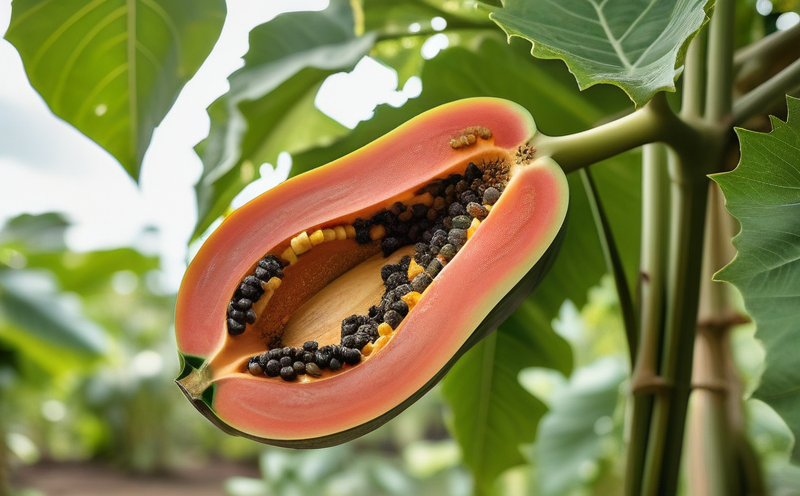
🍎 Papaya

Carica papaya
fruits tree (short-lived perennial)
Illustration of Papaya
☀️ Sun
full sun
💧 Water
high
🗺️ Zones
9-11
🪴 Soil Type
loamy, sandy
🧪 Soil pH
5.5-7.0
💧 Drainage
well-drained
📏 Spacing
6-10 feet
📐 Height
10-25 feet
📅 Days to Maturity
180-365 days (6-12 months from seed to fruit)

🍴 Edible Parts

🍽️ fruit (flesh🍽️ seeds)🍽️ leaves (cooked)🍽️ flowers

🤝 Companions (11)

Fast-growing papaya provides quick temporary shade for cacao seedlings while they establish, then can be removed as cacao matures
Both thrive in similar tropical conditions; banana's broad leaves protect young papaya from wind, and papaya's shallow roots don't compete with banana
🤝 Bean (Bush)
Bush beans fix nitrogen to feed the heavy-feeding papaya, and their low growth habit doesn't compete for light
Sweet potato provides excellent living ground cover around papaya, retaining soil moisture, suppressing weeds, and reducing nematode pressure.
Taro thrives in the moist, partially shaded conditions created by papaya; traditional Pacific and Southeast Asian intercropping combination.
🤝 Pineapple
Pineapple grows well between papaya trees, tolerating the partial shade and providing a low-growing secondary crop; common in tropical home gardens.
🤝 Citrus Tree (General)
Young citrus trees can be interplanted with papaya, which provides quick returns while the slower-growing citrus matures.
Papaya can serve as a fast-growing temporary shade tree for young coffee plants, then be removed as coffee matures and needs less shade.
Ginger benefits from the dappled shade of papaya; both are shallow-rooted and share similar moisture requirements.
Turmeric grows well as an understory crop beneath papaya in humid tropical gardens.
Pigeon pea fixes nitrogen, provides wind protection for papaya, and can be pruned for mulch.

⚠️ Keep Apart (3)

Eucalyptus depletes soil moisture aggressively and releases allelopathic oils that stunt papaya growth
⚠️ Walnut (Black)
Juglone toxicity causes rapid wilting, leaf burn, and death in papaya plants
Both are susceptible to similar soil-borne fungal diseases and nematodes; rotational overlap increases disease pressure

💊 Medicinal Uses

Papaya fruit contains papain, a powerful proteolytic enzyme that aids protein digestion and is used commercially as a meat tenderizer. The enzyme has anti-inflammatory, wound-healing, and anti-edema properties. Papaya leaf extract is used to increase platelet counts in dengue fever patients and has shown antimalarial and hepatoprotective properties. The fruit is exceptionally rich in vitamin C (more than oranges), vitamin A, and folate. Papaya seeds have anthelmintic (anti-parasitic) and antibacterial properties when consumed. Unripe papaya has been used traditionally as a contraceptive and to induce menstruation.

📜 History & Traditional Uses

Papaya originated in southern Mexico and Central America, where it was domesticated by Maya and Aztec civilizations. Spanish and Portuguese explorers spread papaya throughout the tropics in the 16th century, and it naturalized rapidly across the Caribbean, Africa, India, Southeast Asia, and the Pacific Islands. In traditional medicine across many tropical cultures, papaya leaf poultices were used for wounds and skin ulcers. The fruit became a staple food across the tropical world due to its rapid growth, high yield, and year-round production.

📝 Notes

Papaya is one of the fastest fruit-producing plants — it can bear fruit within 6-12 months from seed. The plant is not a true tree but a giant herbaceous plant with a hollow, unbranched trunk. Papaya plants are typically dioecious (male and female flowers on separate plants) or hermaphroditic. They require excellent drainage and will die quickly in waterlogged soil or frost. Papaya is highly susceptible to papaya ringspot virus, a devastating disease transmitted by aphids. Plants are productive for 3-5 years, after which they become too tall and yields decline. The white latex sap can cause skin irritation in sensitive individuals.