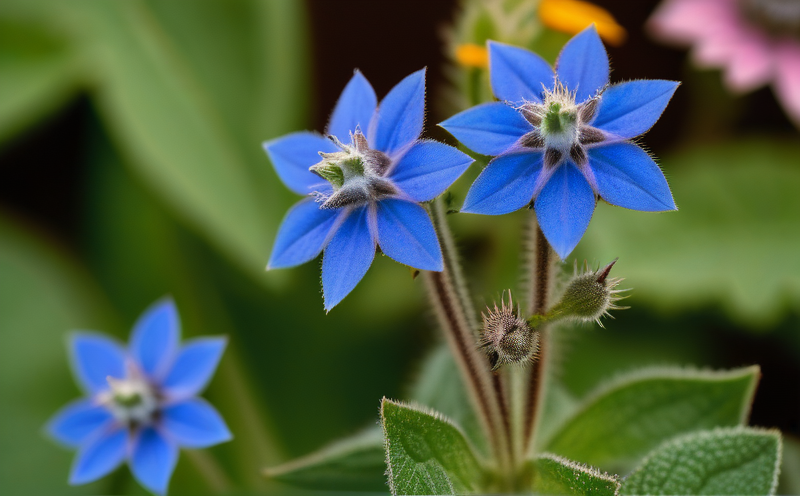
🌿 Borage

Borago officinalis
herbs Annual herb (self-seeds readily) Boraginaceae
Borage plant photo
☀️ Sun
Full sun to partial shade; 4-6 hours minimum.
💧 Water
Drought-tolerant once established. Moderate water.
🗺️ Zones
Annual everywhere; reliably self-seeds in zones 3-10
🧪 Soil pH
6.0-7.0 (tolerates poor, dry soil; prefers well-drained)
🪴 Soil Type
Well-draining, poor to moderately rich; pH 6.0-7.0. Tolerates poor soil. Too-rich soil produces lush leaves but fewer flowers.
📏 Spacing
12-24 inches apart
📐 Height
24-36 inches (can reach 48 inches)
⏱️ Maturity
50-60 days to flower

🍴 Edible Parts

🍽️ Flowers (best , cucumber-like flavor) 🍽️ Young leaves (sparingly , prickly when mature, PA concern) 🍽️ Seed oil
Key:🤝 Grows well together❌ Keep apart☀️ Sun needs💧 Water🗺️ Hardiness zone

🤝 Companions (13)

Borage attracts pollinators to apple blossoms and deters codling moth; nutrient-accumulating mulch.
Attracts pollinators; improves essential oil production in nearby herbs.
Repels cabbage worms; attracts beneficial parasitic wasps.
🤝 Fruit trees
Excellent pollinator attractor , plant near fruit trees for better fruit set.
🤝 Legumes
Attracts pollinators; adds trace minerals to soil as leaves decompose (dynamic accumulator).
Attracts bees and other pollinators essential for squash fruit set.
Borage is said to improve strawberry flavor and vigor; attracts bees for pollination.
Borage repels tomato hornworms and cabbage worms; attracts pollinators for better fruit set.
Borage planted near squash attracts pollinators and predatory insects; its flowers provide nectar for bees that pollinate squash. Recommended by the Almanac as a squash companion.
Borage attracts bees for zucchini pollination; deters pests with its cucumber-like scent.

⚠️ Keep Apart (2)

Fennel's allelopathy may inhibit borage growth.
Some reports of competition; evidence is mixed.

💊 Medicinal Uses

Conditions Treated

💊 Adrenal fatigue and stress (adrenal tonic , one of the best herbs for adrenal support) 💊 Depression and melancholy ('gladdening the heart' , traditional mood elevator) 💊 Dry, inflamed skin conditions (eczema, dermatitis , high GLA/mucilage content) 💊 Fevers and inflammation (cooling; promotes sweating) 💊 Respiratory congestion and dry cough (moistening expectorant; soothes irritated membranes) 💊 Rheumatoid arthritis (GLA is anti-inflammatory) 💊 PMS and menopausal symptoms (GLA helps regulate prostaglandins) 💊 Urinary tract irritation (demulcent , soothes urinary tract) 💊 Hangover (traditional 'morning after' remedy , source of 'borage for courage')

Preparation Methods

  • Borage tea: 1-2 tsp fresh/dried leaves and flowers steeped 10 min; for adrenal support, melancholy, and fevers (drink cool for fevers)
  • Borage lemonade: Fresh flowers and leaves infused in lemonade as 'cooling' summer drink
  • Borage tincture: 1:5 in 40% alcohol; 2-4ml 3x daily for adrenal support
  • Infused oil: Borage flowers in carrier oil for skin conditions (or use commercial borage seed oil , much higher GLA)
  • Poultice: Crushed fresh leaves applied to inflamed skin
  • Borage seed oil capsules: 500-1000mg daily for eczema, arthritis, PMS (commercial preparation , highest GLA source in nature at 20-26%)
  • Fresh flowers: Eaten as garnish , lifts mood (said to 'make a man merry')

Active Compounds

⚗️ Gamma-linolenic acid - GLA (seed oil , 20-26%) ⚗️ Mucilage ⚗️ Pyrrolizidine alkaloids (trace in leaves , see warnings) ⚗️ Saponins ⚗️ Tannins ⚗️ Potassium nitrate

⚠️ Safety

IMPORTANT: Borage leaves and flowers contain trace amounts of pyrrolizidine alkaloids (PAs) , these are hepatotoxic and potentially carcinogenic with long-term internal use. The levels are very low, but regulatory agencies advise against long-term regular internal use of borage leaf/flower preparations. Borage SEED OIL is PA-free and safe for long-term use. Avoid internal use during pregnancy and breastfeeding. Do not use borage leaf for more than 2-3 weeks consecutively. Those with liver disease should avoid entirely.

📜 History & Folklore

🏛️ Ancient

Pliny called it 'euphrosynum' (bringer of gladness). Greeks and Romans used borage to 'make a man merry.' Dioscorides recommended it for 'fevers and inflammations.'

🏰 Medieval

'Ego Borago gaudia semper ago' , 'I, Borage, always bring courage.' Used in medieval wine cups to 'drive away sadness' and give courage. Celtic warriors drank borage wine before battle. Used to 'comfort the heart' during plague times.

🌿 Folk Medicine

Traditional European 'cooling cordial' for fevers. Key ingredient in 'cool tankard' drinks. Used as an adrenal restorative before 'adrenal fatigue' was a term. The flowers crystallized as decorative sweets. Borage and lemon balm combined for 'melancholy.'

🛒 Buy Seeds & Plants

Plot Buddies is reader-supported. When you buy through links on our site, we may earn an affiliate commission at no extra cost to you. This does not affect our plant recommendations. We only link to retailers we trust.