🌼 Marigold

Tagetes patula (French marigold); Tagetes erecta (African marigold); Tagetes tenuifolia (Signet marigold)
flower Annual Asteraceae
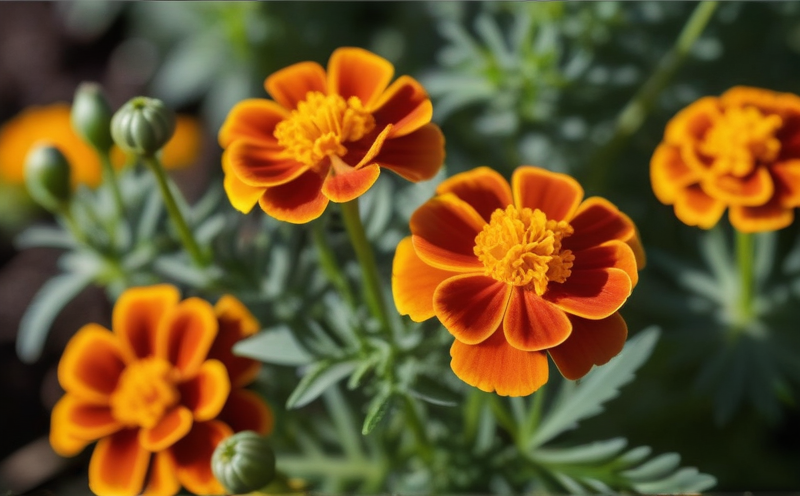
Marigold plant photo
☀️ Sun
Full sun; 6+ hours direct sunlight per day. Poor blooming and mildew risk in shade.
💧 Water
Low to moderate. Drought-tolerant once established. Water at base , overhead watering promotes powdery mildew.
🗺️ Zones
2-11 (grown as annual in all zones; tender perennial only in zones 10-11). Soil temp must reach 65°F for germination.
🧪 Soil pH
6.0-7.0
🪴 Soil Type
Adaptable; best in moderately fertile loamy or sandy loam. Tolerates poor soils but not waterlogged conditions.
🚿 Drainage
Well-drained; intolerant of consistently wet soil.
📏 Spacing
8-18 inches (French/Signet 8-12 in; African 12-18 in)
📐 Height
T. patula: 6-24 inches; T. erecta: 24-48 inches; T. tenuifolia: 6-12 inches
⏱️ Maturity
50-90 days to first bloom (French 50-60 days; African 70-90 days)

🍴 Edible Parts

🍽️ Petals (T. tenuifolia signet marigold petals are culinary; T. erecta/patula can cause irritation in some)
Key:🤝 Grows well together❌ Keep apart☀️ Sun needs💧 Water🗺️ Hardiness zone

🤝 Companions (13)

Asparagus beetles (Crioceris asparagi and C. duodecimpunctata) are deterred by marigold volatile compounds. Attracts beneficial insects that prey on these beetles. Compatible as border planting around permanent asparagus beds.
Combined volatile profiles (marigold's limonene/thiophenes + basil's linalool/eugenol) create broader-spectrum pest deterrence. Both are drought-tolerant, full-sun annuals with compatible care requirements.
Marigold root exudates (alpha-terthienyl) suppress root-lesion nematodes (Pratylenchus spp.) that damage carrot roots , most effective as pre-plant cover crop. Volatile compounds may also disrupt carrot fly (Psila rosae) host-finding.
Marigold's strong volatile scent deters cucumber beetles (Acalymma vittatum and Diabrotica spp.) , major cucurbit pests , by interfering with host-finding behavior. Attracts beneficial insects preying on aphids.
T. erecta volatile organic chemicals (ocimene, beta-phellandrene, limonene) repel eggplant fruit and shoot borer (Leucinodes orbonalis) in repellency assays. Also deters aphids colonizing eggplant.
Alliums and marigolds create layered chemical defense. Marigold volatiles deter thrips and aphids; both produce strong aromatic compounds that confuse pest insects through olfactory interference.
Marigold volatile scent deters aphids (including Myzus persicae) and slugs from colonizing nearby lettuce. Attracts hoverflies whose larvae are voracious aphid predators.
Marigold volatiles deter thrips and aphids that damage allium foliage. Combined aromatic compounds from both plants create layered olfactory interference for pest insects.
Peppers share the same whitefly, aphid, and nematode pressures as tomatoes. Marigold airborne volatiles (limonene, thiophenes) deter these pests. Border planting attracts hoverflies and parasitic wasps that prey on aphids attacking pepper plants.
Marigold's volatile scent masks rose host-plant cues used by aphids. Attracts lacewings (Chrysoperla spp.), hoverflies (Episyrphus balteatus), and parasitic wasps , all aphid natural enemies. Marigold foliage odor may repel Japanese beetles (Popillia japonica).
Strawberries are highly susceptible to root-knot nematodes (Meloidogyne spp.). Pre-planting marigolds as a cover crop significantly reduces nematode populations. As border planting, deters spider mites and attracts beneficial predatory insects.
Squash vine borers and cucumber beetles are deterred by marigold volatiles. Marigold's attraction of hoverflies (whose larvae eat aphids) provides additional pest control for squash.
French marigolds (T. patula) release airborne limonene which deters glasshouse whitefly (Trialeurodes vaporariorum) , confirmed by 2019 Newcastle University/PLOS ONE study. As a pre-plant cover crop, suppresses root-knot nematodes (Meloidogyne spp.) that devastate tomatoes. Plant marigolds 6, 8 weeks before tomatoes for nematode benefit.
⚠️ Keep Apart (4)

Marigold root exudates and leaf leachates contain allelopathic phenolic compounds and thiophene derivatives that inhibit germination and root development in Phaseolus vulgaris (common bean). Studies confirm Tagetes soil residues suppress bean seedling growth. Keep at least 3, 4 feet separation.
Evidence of growth inhibition from marigold root exudates at close range. Marigolds also attract thrips (Frankliniella occidentalis), a significant brassica pest, potentially making them a reservoir that worsens brassica thrips pressure.
Fennel is broadly allelopathic to most plants including marigolds. Fennel volatiles (anethole, fenchone) can stunt marigold growth, and fennel competes aggressively for water and nutrients.
Same allelopathic mechanism as bush bean , Tagetes phenolic compounds and thiophenes inhibit Phaseolus vulgaris germination and root development at close proximity.

📝 Growing Notes

IMPORTANT , Nematode suppression caveat: Marigolds do NOT suppress nematodes when interplanted alongside susceptible crops , nematodes simply move to companion roots. Effective suppression requires DENSE planting of French or African marigold as a COVER CROP for 6-8 weeks BEFORE the susceptible crop in the same location (not simultaneously). T. tenuifolia (signet) varieties are actually nematode-susceptible , do not use for nematode control. Use T. patula or T. erecta only. Alpha-terthienyl is released by living roots and inactivated by UV; dried material offers no benefit.

🛒 Buy Seeds & Plants

Plot Buddies is reader-supported. When you buy through links on our site, we may earn an affiliate commission at no extra cost to you. This does not affect our plant recommendations. We only link to retailers we trust.