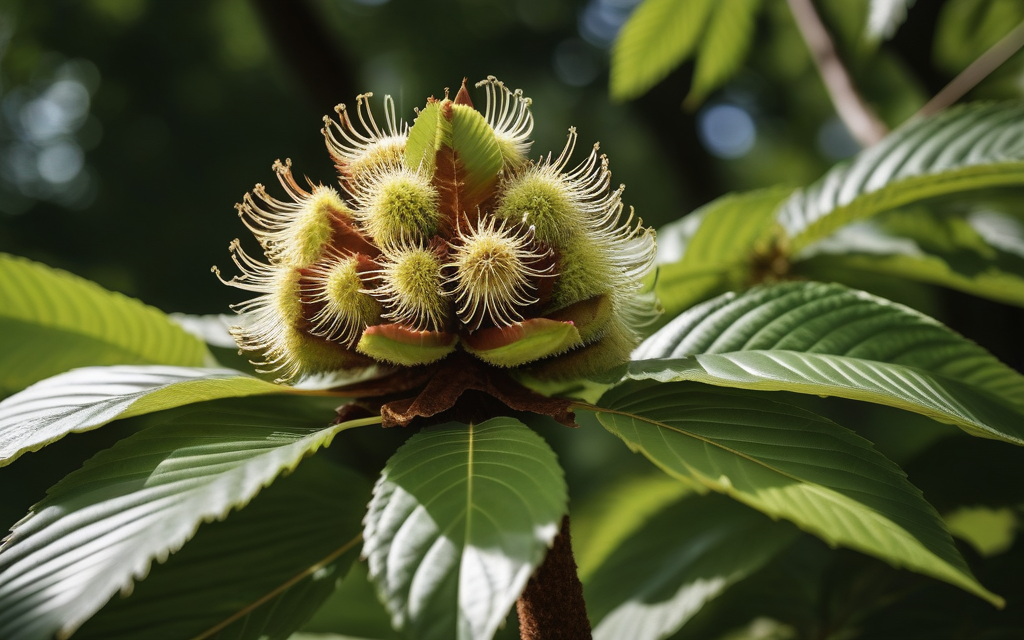
🌰 Chestnut Tree
Castanea spp.
Tree
☀️ Sun
Full sun (6+ hours)
💧 Water
Low to moderate; drought-tolerant once established
🗺️ Zones
4–8
📏 Spacing
30–40 ft
📐 Height
25–60 ft
🧪 Soil pH
5.5–6.5
⏱️ Maturity
3–5 years (hybrid grafted); 6–10 years (seedling)
Key:🤝 Grows well together❌ Keep apart☀️ Sun needs💧 Water🗺️ Hardiness zone
🤝 Companions (6)
🤝 Clover
Good companion — Chestnut Tree and Clover grow well together.
Good companion — Chestnut Tree and Comfrey grow well together.
Good companion — Chestnut Tree and Marigold grow well together.
Good companion — Chestnut Tree and Yarrow grow well together.
🤝 Native wildflowers
Good companion — Chestnut Tree and Native wildflowers grow well together.
🤝 Another Chestnut variety
Good companion — Chestnut Tree and Another Chestnut variety grow well together.
⚠️ Keep Apart (3)
Keep apart — these plants do not grow well together.
⚠️ Competitive grass
Keep apart — these plants do not grow well together.
⚠️ Invasive plants
Keep apart — these plants do not grow well together.
📝 Growing Notes
Chestnuts are highly productive nut trees that support wildlife and provide dense summer shade. They need two varieties for cross-pollination and thrive in well-drained, slightly acidic soil. Hybrid Chinese-American chestnuts are strongly preferred for their resistance to chestnut blight, which wiped out most American chestnut (C. dentata) populations in the 20th century.