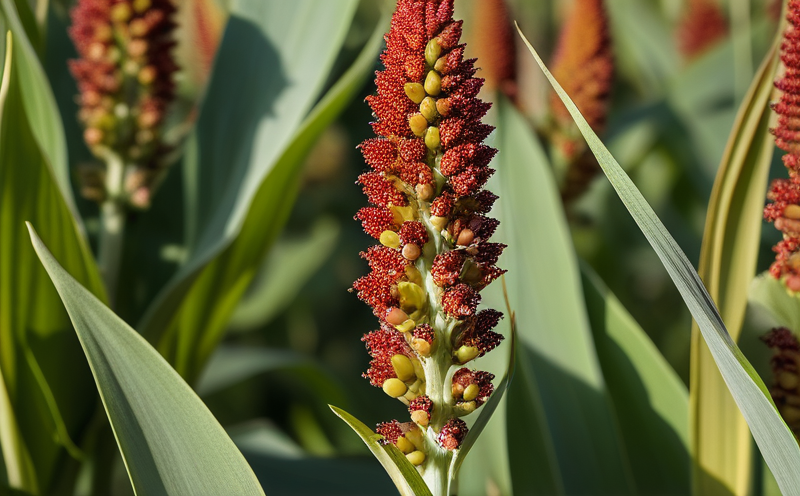
🌾 Sorghum

Sorghum bicolor
grains annual
Illustration of Sorghum
☀️ Sun
full sun
💧 Water
low to moderate (highly drought-tolerant)
🗺️ Zones
4-11 (as annual)
🪴 Soil Type
loamy, sandy, clay (tolerates wide range)
🧪 Soil pH
5.5-7.5
💧 Drainage
well-drained
📏 Spacing
6-12 inches (grain), 4-6 inches (forage)
📐 Height
3-15 feet (depending on variety and purpose)
📅 Days to Maturity
90-130 days (grain), 55-75 days (forage/silage)

🍴 Edible Parts

🍽️ seeds (grain)🍽️ stems (sweet sorghum for syrup)🍽️ leaves (forage)

🤝 Companions (10)

🤝 Cowpea
Cowpeas fix nitrogen for sorghum and their vining growth suppresses weeds; a traditional African intercropping system that improves total yield
🤝 Pigeon Pea
Pigeon pea fixes nitrogen, its deep taproot accesses different soil layers, and it provides a long-term protein crop between sorghum seasons
Sweet potatoes serve as living mulch under taller sorghum, suppressing weeds and conserving soil moisture while producing an additional crop
Peanuts fix nitrogen with a low, spreading habit acting as living mulch beneath sorghum; both thrive in hot, sandy soils with good drainage.
🤝 Lablab (Hyacinth Bean)
Lablab is a drought-tolerant climbing legume using sorghum stalks as support; this traditional African system fixes nitrogen while maximizing space.
🤝 Sesame
Sesame's upright habit and deep taproot reach different soil layers than sorghum; both are heat-tolerant semi-arid intercrop partners.
Okra and sorghum share heat and drought tolerance; okra's upright growth complements sorghum's tall stalks in summer polycultures.
🤝 Sunn Hemp
Sunn hemp is an excellent nitrogen-fixing green manure for rotation or intercropping with sorghum; suppresses root-knot nematodes.
🤝 Mung Bean
Mung beans mature quickly and fix nitrogen for sorghum; can be intercropped or grown in short rotation to boost fertility.
🤝 Guar (Cluster Bean)
Guar is extremely drought-tolerant, fixing nitrogen in the same arid conditions as sorghum; its gum is a valuable secondary cash crop.

⚠️ Keep Apart (6)

⚠️ Walnut (Black)
Juglone toxicity inhibits sorghum root development and seedling vigor; sorghum should not be planted near black walnut trees
Both are heavy feeders that deplete soil nutrients; their deep root systems compete aggressively, reducing yields for both crops
Shared susceptibility to stem borers, rust, and fungal diseases; rotational proximity or intercropping increases disease pressure
⚠️ Corn (Maize)
Corn and sorghum share corn earworms, stem borers, and fungal diseases; planting together amplifies pest and disease pressure.
Sorghum and wheat share fusarium head blight and rust pathogens; close planting increases disease carryover.
⚠️ Johnsongrass
Johnsongrass is a wild Sorghum relative crossing with cultivated sorghum, creating aggressive weed hybrids; harbors pests and diseases year-round.

💊 Medicinal Uses

Sorghum grain is gluten-free and rich in complex carbohydrates, dietary fiber, B vitamins, iron, magnesium, phosphorus, and potassium. It has the highest antioxidant content among major cereal grains, particularly in pigmented (black, red) varieties that contain 3-deoxyanthocyanidins unique to sorghum. These compounds have demonstrated anticancer, antidiabetic, and anti-inflammatory properties in research. Sorghum has a low glycemic index compared to wheat and rice. The bran is rich in phenolic compounds that inhibit protein glycation, potentially beneficial for diabetes management. Sweet sorghum syrup is a traditional mineral-rich sweetener containing iron, calcium, and potassium.

📜 History & Traditional Uses

Sorghum was first domesticated in Northeast Africa (present-day Sudan and Ethiopia) approximately 5,000-8,000 years ago. It spread across Africa as a staple grain and along trade routes to India and China by the first millennium BCE. African slaves brought sorghum knowledge to the Americas, where it became a major crop in the southern United States. Sweet sorghum was widely grown for syrup production before cane sugar became dominant. In many parts of Africa and Asia, sorghum remains a dietary staple — used for porridge, flatbreads (injera in Ethiopia, roti in India), couscous, and traditional fermented beverages (traditional African beer, Chinese baijiu). Today, the US is the world's largest sorghum producer, primarily for animal feed and ethanol.

📝 Notes

Sorghum is a C4 grass with exceptional heat and drought tolerance — it can go dormant during drought and resume growth when moisture returns, earning it the nickname 'the camel of crops.' It thrives where corn would fail. Sorghum is classified by use: grain sorghum (milo), sweet sorghum (for syrup/biofuel), forage sorghum (livestock), and broomcorn (for brooms). Some varieties contain dhurrin, a cyanogenic compound that can be toxic to livestock if plants are stressed or frosted. Sorghum is naturally gluten-free and increasingly used in gluten-free baking and brewing (sorghum beer). The plant produces allelopathic root exudates that suppress weeds.