🌿 Black Locust Tree
Robinia pseudoacacia
Tree
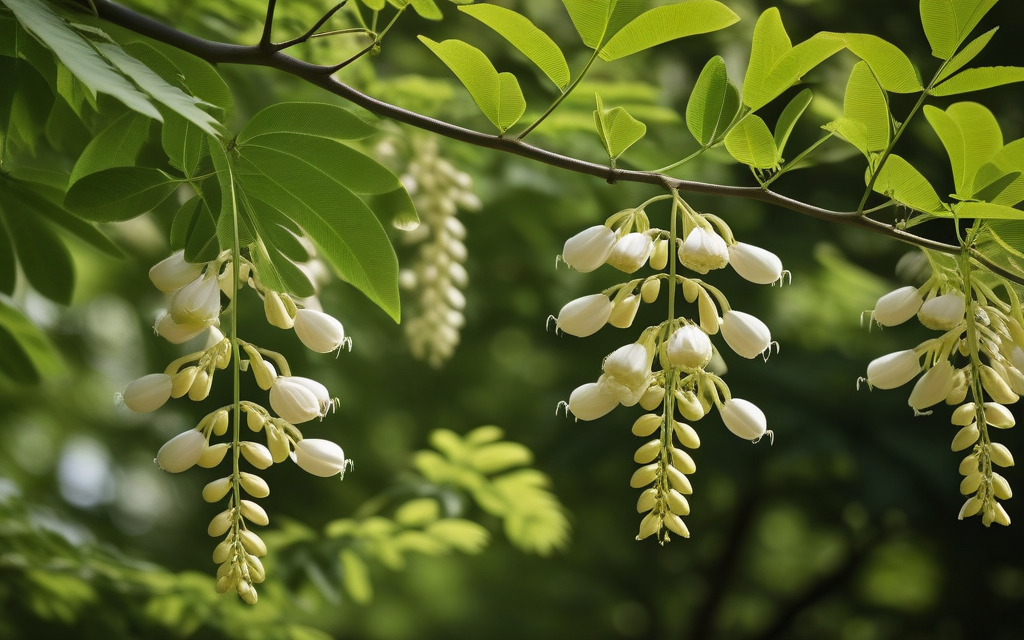
☀️ Sun
Full sun (6+ hours)
💧 Water
Low; very drought-tolerant; adapts to poor soils
🗺️ Zones
4–8
📏 Spacing
20–40 ft
📐 Height
40–70 ft
🧪 Soil pH
6.0–7.5 (tolerates 5.1–8.5)
⏱️ Maturity
Fast-growing; canopy in 10–20 years; flowers in 2–3 years
Key:🤝 Grows well together❌ Keep apart☀️ Sun needs💧 Water🗺️ Hardiness zone
🤝 Companions (5)
🤝 Fruit trees (as nitrogen source)
Good companion — Black Locust Tree and Fruit trees (as nitrogen source) grow well together.
Good companion — Black Locust Tree and Sea Buckthorn grow well together.
Good companion — Black Locust Tree and Comfrey grow well together.
🤝 Native wildflowers
Good companion — Black Locust Tree and Native wildflowers grow well together.
🤝 Clover
Good companion — Black Locust Tree and Clover grow well together.
⚠️ Keep Apart (2)
⚠️ Dense planting near fruiting trees (competition)
Keep apart — these plants do not grow well together.
⚠️ Sensitive understory plants (root sprouts)
Keep apart — these plants do not grow well together.
📝 Growing Notes
Black locust is one of the most productive nitrogen-fixing trees in temperate climates and thrives in poor, rocky, or compacted soils where little else grows. Its lacy canopy allows significant light to filter through, making it an excellent overstory companion for fruit trees. Notably, it is one of the few trees that tolerates black walnut's juglone. Note: it is invasive in some regions — check local regulations before planting.