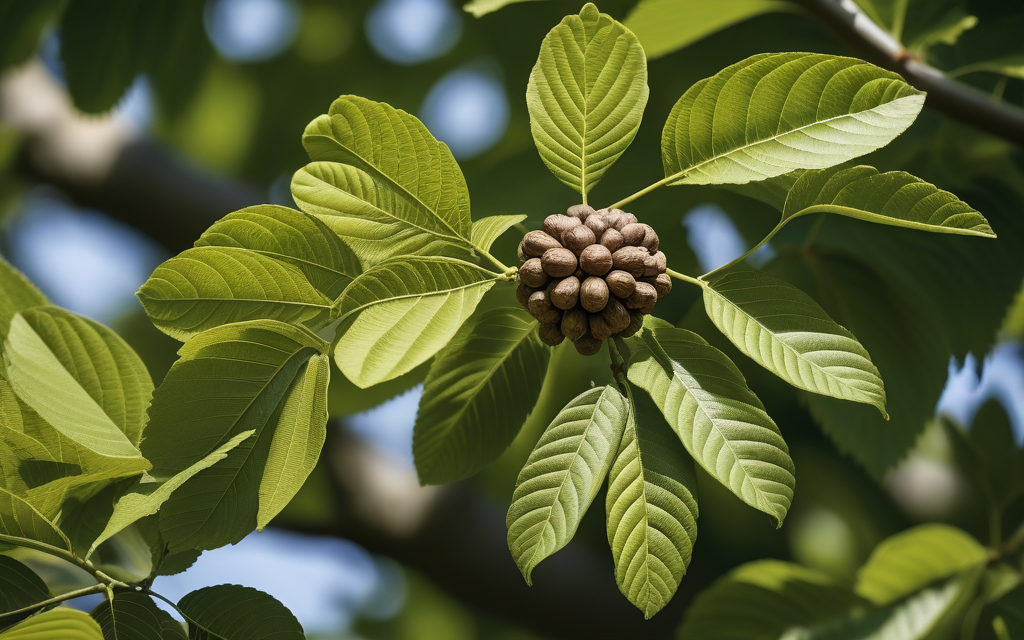
🌰 Black Walnut Tree
Juglans nigra
Tree
☀️ Sun
Full sun (6+ hours)
💧 Water
Low to moderate; drought-tolerant once established
🗺️ Zones
4–9
📏 Spacing
40–60 ft
📐 Height
50–75 ft
🧪 Soil pH
6.0–7.5
⏱️ Maturity
10–20 years to first significant nut production
Key:🤝 Grows well together❌ Keep apart☀️ Sun needs💧 Water🗺️ Hardiness zone
🤝 Companions (7)
🤝 Black Locust
Good companion — Black Walnut Tree and Black Locust grow well together.
Good companion — Black Walnut Tree and Elderberry grow well together.
Good companion — Black Walnut Tree and Pawpaw grow well together.
🤝 Black Raspberry
Good companion — Black Walnut Tree and Black Raspberry grow well together.
🤝 Most grasses
Good companion — Black Walnut Tree and Most grasses grow well together.
🤝 Stonecrop
Good companion — Black Walnut Tree and Stonecrop grow well together.
🤝 Astilbe
Good companion — Black Walnut Tree and Astilbe grow well together.
⚠️ Keep Apart (5)
⚠️ Apple
Keep apart — these plants do not grow well together.
Keep apart — these plants do not grow well together.
Keep apart — these plants do not grow well together.
⚠️ Peach
Keep apart — these plants do not grow well together.
⚠️ Rhododendron
Keep apart — these plants do not grow well together.
📝 Growing Notes
Black walnut is notorious for producing juglone in its roots, hulls, and leaves — a compound that inhibits or kills many garden plants within 50–80 ft of a mature tree. Juglone-tolerant companions include black locust, elderberry, and pawpaw. Despite its allelopathic reputation, black walnut produces highly valuable timber and nutritious edible nuts.